Saturday, May 13, 2023

Quiet Yucatan


I have often been asked where to find quiet places in Yucatan.


I always find this question amusing: “You have got to be kidding. Have you ever been to Yucatan before?”


I love Yucatan, but after forty plus years here quiet is something that has nearly eluded us. The locals love their lifestyle, and if you have a good positive attitude you will too.


At times it seems to me that the Yucatecan mentality holds two things sacred above all else: smoke and noise. Their ultimate success in life is an ear-splitting motorcycle emitting a cloud of impenetrable smoke. Do they possess a genetic predisposition to racket and an aversion to silence?


Vehicles rattle, clatter, squeak, and incessantly honk their horns while mufflers seem to be a superfluous annoyance.


Petite vehicles marauding city streets sporting enormous megaphones powered by mammoth amplifiers relentlessly blast deafening clatter that will vibrate the fillings out of your teeth.


Ear-splitting fireworks are incessantly detonated for festivals or business promotions, day and night. Dogs desperately try to cover their ears and escape.


In most places in the world this sonic trash would be prohibited…not so here; the government happens to be the major delinquent.


If ultra high decibel racket drives you to distraction beware of the salon de fiestas, also known as party palaces. I swear these all night establishments are capable of shaking you out of bed even from several blocks away.  Many times they magically materialize in hotel lobbies around midnight.


You may locate an upscale restaurant to enjoy a special occasion in tranquility. The waiters are sure to turn on a giant screen TV even if you are the only clients. A Mariachi band is liable to trumpet their way through and an industrial strength blender will be revved up that cannot be screamed above. Coffee grinders are sure to pick up when noise generating is slack. 


One day I went to the neighborhood grocery “tienda” and had to scream in the owner’s ear. A large bank of mighty speakers left from a previous night’s fiesta was terrorizing the neighborhood. I asked if they had requested the volume to be turned down. The owner replied yes and was told he was too nervous and if he listened to the music he would like it. The next retort was “if you don’t like it, you don’t have to listen.”


Looking for tranquility we have stayed in a typical Mayan hut down a dirt road located far out in the jungle and with no electrical service. Before the first glimmer of dawn crowing rosters broke the relative silence. They were joined by squealing pigs, barking dogs, trucks honking and screaming with bullhorns selling bottled gas and coconuts. We didn’t know if we should laugh or scream.


If you can hear dogs barking it is considered quiet.


We travel with 33 db foam ear plugs. Dampen them, roll tightly, and press into your ears. Allow them to expand slowly and their effectiveness is increased.


We happen to live in a relatively quiet neighborhood with a canopy jungle ecologically friendly home where we can actually hear birds singing in our fruit filled trees and crickets chirping.


This is the real Yucatan. Arm yourself with a positive attitude, be happy and if you don’t like the noise, don’t listen!

Mayapan

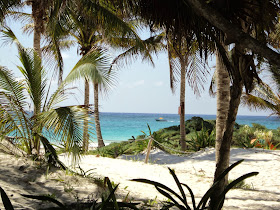
The ruins of Mayapan.  A quiet place in Yucatan. 

Comment from Jim Grafsgaurd

Right on Bing! You might miss all this racket if you didn't have it around.


Here is a note I posted on FB:


SOUNDS of Merida we will miss..

On leaving Merida for Minneapolis, these are some of the SOUNDS we will miss:

the loud playfully varied chirps whistles and responses of the Quiscal Mexicano (Great-tailed Grackle), the dog-choirs yapping and barking in all ranges of voice thru-out the neighborhood at night, los gallos (roosters) crowing at all hours, the particular calls and identifying signals of the many street vendors who pass by the house on motos or triciclos or horse-drawn carts (!TIERRRRAAA! (selling bags of soil for rocky Yucatan gardens) !ORQUETAAAAS! (selling long forked sticks to support clotheslines) or the panflute arpeggios of the afilidores (knife sharpeners) and the rubber honky horn of the panaderos (bread vendors) just to mention a few, and finally the karaoke, cumbia, salsa, mariachi, banda, danzon, current latin pop and classic rock Mexicano amplified on the cool late-night breezes from outdoor parties around town

Mayan temple ruins near Mérida - seldom visited - quiet Yuc

Saturday, April 1, 2023

HOW WE CAME TO LIVE IN MEXICO - Stories April 2023


HOW WE CAME TO LIVE IN MEXICO

My first look at Mexico 1967

My father and I took the train from Superior, Wisconsin to Las Vegas to attend the American Pharmaceutical convention.

We saw all we wanted the first day and took a $13.00 flight to San Francisco, rented a car and headed south to San Diego, spent the night, and the next day entered the Mexican state of Baja California, sightseeing, shopping, and sampling food and drink. Dad and I had a glorious fun-filled two week trip and returned home by train.

1970

My next trip to Mexico was with my wife Jane. I won a two week all-inclusive trip to Europe, the Caribbean Sea islands or Mexico. Our choice was Mexico because we thought that was one place we would never return to. We didn’t speak a word of Spanish, but all went well and our fun-filled honeymoon adventure was wonderful.

Three years later

We were in St. Augustine, Florida, aboard our dream boat Dursmirg having completed our maiden voyage and our five year plan of building our boat and sailing south to where there was no snow.

I saw an opportunity to put my newly acquired navigation skills to work. It so happened that St. Augustine was the world’s trawler building capital, and across the river from our docked boat were hundreds of newly launched trawlers awaiting captains to take them to distant destinations worldwide.

I soon found myself headed to Yucatan in Mexico captaining a brand new 128 ton trawler, one of many I would deliver to Campeche, Progreso, and even to La Paz, Baja California, on the Pacific Ocean, a twenty eight day voyage. My deliveries to Campeche were five days at sea followed by numerous logistical bureaucratic paper signings and stamping that made it a two week turnaround trip. As one of my crew members said; “The Mexicans nail one of your feet to the deck, and for three days you run around in circles signing papers.”

When my deliveries were to Campeche or Progreso, I had to go to Mérida, Yucatan, to fly home. Often there was a several days before my flight. I along with my crew had time to explore the interesting streets, markets, and cantinas.

Ten years later

After selling our apartment business in St. Augustine, Florida, and then making an excursion in our shrimp boat Secotan to Tampa for the winter something happened that changed the course of our lives. The fishing was bad, and we discovered we could take a freighter from Pinellas Seafood dock, a division of Red Lobster, to the Bay Islands of Honduras for one hundred dollars each, round trip. We talked to the captain, and he agreed to take us with him on his next trip in two weeks. It seemed too good to be true and it was. When the freighter returned two weeks later, our bags were packed, and we were ready to go, but somethings happened to change our minds. The captain and crew and even the dockside personal were all changed. The new employees were surly with an unfriendly attitude, but what totally convinced us not to make the trip was what we witnessed when the freighter returned. It arrived after dark and hastily began unloading for over two hours before the customs inspectors arrived. They rapidly unloaded freight that was not refrigerated lobster. We weren’t going to be passengers on a clandestine smuggler’s vessel. The next morning we were on our bicycles headed for a travel agent. We were still going on a trip and would implement plan B, which was possibly flying to the Bay Islands of Honduras. The price of air fare was going to make that option out of the question. Surprise! There hanging on the wall at the travel agent was a large travel poster featuring Mérida, Yucatan, Mexico. This was a place I had visited on boat deliveries from St. Augustine and loved, perfect! We purchased two tickets to Mérida and were on our way. Ironically, Jane and I, thinking that a visit to Mexico was a once in a lifetime event, we chose Mexico as the place for our honeymoon, never expecting that we would return. Somehow Mexico had cast its magical magnetic spell over us.

Here I was headed back to Mexico once more, this time with my wife at my side. I was drawn like a magnet back to Yucatan.

Yucatan, Mexico

We planned to make our Yucatan excursion an economical no frills adventure; staying until we ran out of cash. On our previous trips to other parts of Mexico we had gone first class, or on an expense account. This trip would be a totally different experience giving us a somewhat magical prospective.

As our plane approached Mérida, Luis, a fellow passenger, told us that he was a friend of the pilot, Armando Troyo. He said that Captain Armando loved to joke with the passengers using a subtle play-on-words. Sure enough, Captain Armando announced on the PA system, “We hope that you enjoyed your flight with us today, and that we will see you again soon. Before landing put your seats in the upright position, stow your trays, fasten your seat belts, and, of course, be sure to take all of your personal defects with you.” This place was going to be fun!

This was Jane’s first visit to Mérida, and she became nearly overwhelmed by the hustle and bustle of street commotion.

The next day, after a fascinating morning sightseeing, Jane and I arrived at the Mexicana Airlines office ready for our surprise lunch to which Luis had invited us when we met him on the airplane. As we were soon to discover, Luis Rosado was not known for his punctuality or reliability regarding appointments. Leaving his office precisely at one o’clock for his lunch break was, however, one of the rare exceptions to this. Take charge Luis was like a secret agent. His main job at Mexicana was to pamper the first class clients. Luis told us to just follow him. Out the door and down the street we went, and less than a block away we entered a dilapidated old building that by all outward appearances looked completely abandoned. We stepped through tall neglected doors, which were well

-weathered by age and each hanging by a single hinge, and into a spooky courtyard that spoke of another time. Seedlings were sprouting from cracks and crevasses around the terraced second story balcony, and even from the rooftop above. In the bygone glory days of this once elegant edifice, formerly known as La Union Social Club, lavish parties and elegant banquets were held at this very spot. Surprise! In this weed tangled, dusty, and neglected courtyard sat some tables, and a waiter in a starched uniform was waiting these tables. This was our end destination. This was the La Union Cantina! Luis was a regular here. We proceeded to a table where several of his friends were seated. The attentive waiter, known to all as “Pedro, El Bueno” immediately brought Luis a Superior beer, his customary brand. The introductions were made, and lo and behold, there was someone we already knew; the famous Mexicana airplane pilot, Armando Troyo. After we were seated, Jane and I couldn’t help but noticing the young fellow that we had just seen pull up outside with his rickety little donkey cart and unload a block of ice from under a shaggy burlap cover and then proceed to drag it away tethered by a rope. To our surprise this young chap followed us into the cantina still dragging his by now rather discolored block of ice across the nasty patio floor. His final destination was the kitchen from which our lunch was being prepared. So, the tourist guides that cautioned us against using the ice in Mexico had some merit.

There was no shortage of beer or food, and nobody had to ask for service. Our waiter kept the table full of freshly made dishes from the kitchen and lots of beer. Everyone there loved to drink lots of beer. To go with all this we also had numerous homemade sauces that ranged from easy and delicate to hellishly hot and fiery scorching. There was no shortage of laughter at our table. Captain Armando kept us entertained with joke after joke. Here are two jokes that Captain Armando told; “What do you use those big guns for?” Cuban, “I shoot cans.” Reporter, “But, they are such big guns, what kind of cans do you shoot?” Cuban, “I shoot Puerto Ri-cans, Mexi-cans, and Ameri-cans.”

Another joke by Captain Armando: A trans-Atlantic flight is having motor troubles and losing altitude. To keep the aircraft aloft the flight crew is pitching everything overboard. Still losing altitude, they are down to just four passengers; a Frenchman, an Englishman, an American and a Mexican. The Frenchman is first to volunteer and hollers out, “Viva la France,” and jumps. Next the Englishman valiantly steps to the door and hollers out, “God Save the Queen” and jumps. Next the American steps up and hollers, “Remember the Alamo” and pitches out the Mexican!

We were now in a world apart and our destiny would be forever altered by this encounter. Over time we were going to have unbelievable adventures with all of these amazing people we were now celebrating lunch with.

The hook was set; Jane and I had found our next dimension in life here in Mexico, the one country we had thought just ten years earlier that we would never revisit.

These were fun people that had definitely unlocked the secret to joyous pleasures of easy going self-indulgence, and we fit right in. When it was time for all of us to depart, Captain Armando, practicing his English, said, “Drink, drank, drunk, sink, sank, sunk.”? Then by blowing into his empty beer bottle he made the sound of “toot, toot, toot.” He then exclaimed as he was leaving, “This ship is sinking!”

Before we left for an afternoon siesta, the bill had to be settled. We now discovered another ingenious Yucatecan trick for keeping the bar tab. Our diligent waiter came around to each of us with his pad of paper and pencil. Then we saw what he was doing. Standing behind our chairs were the empty beer bottles that Pedro counted and tallied our tab, there could be no argument of padding the bill with this simple procedure. Our new found friend, Luis Rosado, craftily did not reach for his billfold, and so I picked up his tab. Luis proved to be a good first contact, but we soon discovered that he never ever reached for his billfold, but then we were actually paying for his entertaining jokes, lively sing-a-longs, contacts, and guide service, and we were having fun.

Our cantina experience left us totally stuffed with food, contented with the hilarious laughter, and sufficiently primed with beer to make our trip back to our hotel a sweltering struggle in the afternoon sun. The afternoon siesta in the land of take it easy was soon to become a blessed daily ritual for us. Here in Yucatan, this was the only natural thing to do until the heat of the day subsided. At this time in Mérida there were only two places with air conditioning, Mexicana airlines office and Plaza Oriente.

The next morning we packed our few belongings, and we headed by bus to the small quiet port town and fishing village of Progreso. Progreso is one of the ports where I had landed several times previously on my boat delivery trips from St. Augustine nearly ten years earlier. These trips consisted of five days at sea followed by dealing with the Mexican bureaucratic paper mill once in port.

The uncertain logistics of a return flight home made these trips into two week turnaround affairs. Points of interest back in the early 1980’s in Progreso were in short supply and the concept of tourism had not yet come to this former pirate ravaged coast that only saw an influx of beach goers from Mérida during Easter Week and for summer vacations in July and August. El Cordobes restaurant, located across the street from the main plaza in Progreso, was the only place to go for coffee. We were about to discover that the exchange rate was going to kill our expense account.

This was indeed a wonderful time to be in Yucatan. Horse drawn carriage taxis clip-clopped the streets of Mérida while hoards of Volkswagen Beetles straddled two lanes jockeying to be mucho-macho as noisy, coughing, and smoking two cycle motorcycles wove their way down the narrow city streets. VW Beetle’s made up the majority of vehicles and few drivers had a license. Auto insurance was nearly unheard of, and the license plates were rarely current. The philosophy back then being that it was better to break the law and beg forgiveness than to first ask permission.

Every day was a new adventure, and three weeks passed quickly.

Unlike Don Pedro de Mendez de Aviles, the founder of St. Augustine in 1565, who told the citizens of the colony upon his departure for Spain that he would return but never did, we found ourselves drawn back to Yucatan again and again. It certainly wasn’t the coffee!

Every day was an adventure, and three weeks passed quickly.

As our flight from Mérida to Miami rattled down the runway for take off, Jane and I looked at each other, and we both said emphatically, “We are coming back.”


For more read Sailing to St. Augustine: Travels of Dursmirg by John M. Grimsrud.
This book and the other 3 in the series are available in Kindle edition and print.

Thursday, March 2, 2023

ECOLOGY FRIENDLY JUNGLE GARDEN SANCTUARY, Stories March 2023

Stories March 2023


ECOLOGY FRIENDLY JUNGLE GARDEN SANCTUARY, updated 2023

First the contrast: Some people are color blind, no amount of explaining will ever get them to see red.

Still others are garbage blind and likewise no amount of explaining will ever get them to see trash.

The ecologically blind are a hopeless lot that are entirely incapable of living in harmony with nature. These are the PPP or ecology enemies that pave it, pollute it and poison it.

As George Bernard Shaw so aptly put it; “An art gallery is a dull place for a blind man.”

Being ecology friendly is not for everybody, but for those who embrace this kind of unpolluted untainted world the reward is incalculable.

ECOLOGICAL CONCEPT HOUSE:

Our requirements for an ecological house and its location.

We needed a home in a semi arid tropical location with fresh natural air flow because of my wife Jane’s asthma.

The year round climate had to be salubrious with no extremes.

We wanted a quiet nature friendly environment.

Privacy in a sanctuary setting.

Location, close to shopping, abundant restaurants and on quiet bicycle friendly streets.

International airport in town.

Excellent public transport by bus and taxi.

World class medical facilities; Mérida is renowned as a prime leader.

Bicycle friendly: Yucatán is a bicycle touring paradise we have not fully explored even after 34 years.

Almost all neighborhoods still have owner operated grocery stores.

Our ecological concept house didn’t just fall out of the sky.

We thought long and hard about our dream home because we had certain requirements that were absolute imperatives. Number one being my wife Jane has asthma, and we were not going to live someplace where she would be required to take medications just to survive. Jane’s doctors in Florida had told us that she could live there, she just wouldn’t live long.

In our many years of travel we fortunately discovered Yucatán with its tropical semi-arid climate and set about locating a north-south facing lot to take full advantage of the prevailing sea breezes. We would want high land that didn’t flood in a heavy rain, away from busy thoroughfares but close enough so we would have good public transport. After four years of poking around and investigating nearly two hundred places we finally found our “special spot” that suited all our requirements.

When our search ended our work began and after two months of hard effort the first person finally came by that told us they thought the place might have possibilities.

Hardly anybody could envision the dream that Jane and I shared.

The property we ultimately purchased resembled a garbage dump in the desert, but we both immediately recognized its hidden potentials.

Two years after we had begun our ecological home project that would use thermo-siphon air exchange without fans or motors to heat in winter, cool in summer, and maintain humidity at low levels, we achieved our goal.

Finally when Jane and I finished we were told how very lucky we were to have such a lovely home and jungle garden. The harder we worked the luckier we were.

The garden was another case;

We started with a desolate rock strewn terrain devoid of foliage. Using no chemicals we began by composted everything in sight included shredded paper and even sawdust from a local furniture factory, in order to build all organic top soil. This process took us fifteen years before our jungle garden ultimately became self perpetuating.

Now thirty three years later in 2023, having started from seed, we have a real canopy tropical jungle filled with towering fruit trees that also provide heavenly cooling shade.

Our secluded jungle garden provides many of our produce requirements including fruits, spices, herbs, medicinal plants, hot chili peppers. Everything here is biodegradable. Our gray water is recycled to the garden.

We are synchronized and coexist with nature creating a positive impact upon the planet...and it just feels good.

Amazingly this has all been achieved using absolutely no chemical insecticides or poisons in our thirty three years here.

We live peacefully, in parallel with nature.

Tropical birds and butterflies abound freely in our private jungle sanctuary wide-open and unrestricted to the sky.

Our screened in spacious covered patios command stunning views of our garden.

This ecological home and jungle garden is in three parts enclosed behind a tall privacy wall inconspicuously tucked away. Each separate dwelling is equipped with bathrooms and their own separate kitchens.

We fill our indoor Jacuzzi in summer. In less than two hours it naturally cools the water. Cooler outside air is taken in through a low window then sucked up and out a roof top chimney that naturally draws up and out. Just like cooling hot soup by blowing on it.

It is amazingly fresh. The discharged water goes to the garden. The naturally cooled Jacuzzi water is a great place to linger in the warmer times of the year while we even drink our coffee and listen to audio books or music. Even when the outdoor temperature exceeds 40 degrees centigrade or 100 degrees F. we have a simple efficient and very economical way to stay perfectly cool and comfortable.

We have city water piped in and bottled drinking water delivered weekly. 

However, we have a solar hot water heater system, which I designed and built from locally obtainable materials that use no electric, gas, pumps or valves for the few cool months of winter.

When I pull the large ball valve to the rooftop water tank it cascades down like Niagara Falls and fills the Jacuzzi in just two minutes.

We clean and then fill the Jacuzzi with fresh water every day recycling the old water to our jungle garden.

Our sanctuary is equipped with places to hang twenty-five hammocks. Even on our rooftop patio covered with flowering vines we can accommodate hammocks in the shade and fanned by nature’s salubrious sea breezes.

Though we have no motorized vehicles we have off-street covered parking that can accommodate vehicles with plenty of space for bicycles.

Outwardly our ecology concept house is relatively unassuming. It is an original design and not copied in any way.

Viewed from the street side our super solar dehydrator, the domed ventilating chimneys and vaulted roof capitalize on heat differentials and have little meaning to those unaware of the functionality of our environmentally friendly home.

Here is a link to a narrated YouTube tour explaining the functioning of our ecologically friendly home. Watching time 2 minutes.  Video home tour.

Link to the story of our home with captioned photos where you can venture inside. Photo tour.

Another link: This one is to a YouTube video Jane made of a collage of the seasonal flowers of our garden. Flowers video.

One more YouTube: Street musician at the municipal market food court. Street music video.

Visit my Amazon author's page

Monday, February 13, 2023

The Ends of Power: An explosive insider's account of Watergate by H. R. Haldeman-Book Review

Book Review - Five Stars

The Ends of Power: An explosive insider's account of Watergate by H. R. Haldeman

Nixon, a complicated man who somehow rode into power from California to a two-term vice president under Eisenhower. His radical ultra right wing beliefs fit perfectly with Eisenhower, Earl Butts and Josef McCarthy. His stubborn one minded persistence finally pushed aside LBJ to gain a two-term presidency. 

You must read this book for the rest of this intriguing story.


EXCERPTS:

It was a chilling thought. If Charles Colson was involved, he could very well have been on one of his projects for the President of the United States.


Colson had signed up an ex-C.I.A. agent named Howard Hunt to work for him and thereafter became very secretive about his exploits in the name of Nixon. Years later I heard of such wild schemes as the proposed fire bombing of a politically liberal foundation (Brookings) in order to retrieve a document Nixon wanted; feeding LSD to an anti-Nixon commentator (Jack Anderson) before he went on television; and breaking into the offices of a newspaperman (Hank Greenspun) who was supposed to have documents from Howard Hughes that revealed certain secrets about Nixon.


I believed Nixon could accomplish almost anything. In fact, this was Nixon’s year. In the past six months he had not only begun the disarmament talks with the Soviet Union, he had dramatically reopened relations with China and — finally — he was about to end the crippling, suicidal Vietnam War. On June 17, 1972, Richard Nixon was at the peak of his powers, a certain winner in the November election. Nothing could hurt him now.\Anticommunism was in my blood. And Nixon, at the time, was one of the most aggressive anti-Communists in the land.

What attracted me to Nixon? As I’ve said I wasn’t a rabid conservative. (And, of course, neither was Nixon, as the real conservatives discovered when Nixon became President and introduced economic proposals that made them shudder, and a reopening of relations with China that inspired absolute fury.)

Nixon rarely spared the rod or the knife in his speeches and, to put it mildly, he wasn’t averse to using all possible means to try to defeat his opponents.


If I took no action, I would pay for it. The President never let up. He’d be on the intercom buzzing me ten minutes after such an order. ‘What have you done about Sidey?’ I’d say, ‘I’m working on it,’ and delay and delay until Nixon would one day comment, with a sort of half-smile on his face, ‘I guess you never took action on that, did you?’ ‘No.’ ‘Well, I guess it was the best thing.’’Americans seemed to react more violently to the belief that their President had lied to them than that he had actually participated in a cover-up. Both he and I thought at the time that he was telling the truth. We were wrong.

Americans seemed to react more violently to the belief that their President had lied to them than that he had actually participated in a cover-up. Both he and I thought at the time that he was telling the truth. We were wrong.


Since Yesterday: The 1930s in America, September 3, 1929–September 3, 1939 by Allen, Frederick Lewis-Book Review


Book Review - Five Stars

Since Yesterday: The 1930s in America, September 3, 1929–September 3, 1939 by Allen, Frederick Lewis

From Roaring 20s, prohibition, speakeasies, lawlessness and out of control runaway stock market speculation that nose dived creating a worldwide depression known as the “Hoover days” to WWII when FDR became a four-term President, this amazing book takes you on that wild roller coaster ride.

Excerpts: Perhaps the onrushing agricultural industrialism would prove as short-lived as the earlier epidemic of tractor farming which had promised so much for the Great Plains during the nineteen-twenties—would lead once more to depletion of the soil and thus to its own undoing as well as the land’s.

Industrial uses for farm products; du Pont, for example, was using farm products in the making of cellophane, Duco, motion-picture film, rayon, pyralin, plastecele, fabrikoid, sponges, window shades, hair ornaments, handbags, alcohols, and a lot of other things which one would hardly associate with the old-fashioned farm.

For a generation or more the conservationists had been warning the country that it was squandering its heritage of land and forests and fields and minerals and animal life: that in effect it was living riotously on its capital of national resources. But to most citizens the subject had seemed dull, academic.


Now, in the Dust Bowl, the Lord had “taken a hand” in instruction. And hardly had the black blizzards blown themselves out when—as if distrustful whether the country properly realized that droughts and floods were not incompatible phenomena, but were associated results of human misuse of the land—the Lord drove the lesson home. The rivers went on a rampage.

Despite all the miseries of the Depression and the recurrent fears of new economic decline and of war, the bulk of the American people had not yet quite lost their basic asset of hopefulness. It was still their instinct to transform a suburban swamp into a city of magic and call it “The World of Tomorrow.” In that world of tomorrow the show which they liked best of all and stood in hour-long queues to enjoy was the General Motors Futurama, a picture of the possible delights of 1960. They still liked to build the biggest dam in all creation and toy with the idea of the happy farmsteads it would water, the enormous engines it would drive, the new and better business it would stimulate. They still liked to stand with elbows on the fence at the edge of the farm and say, “Sooner or later I aim to buy those forty acres over there and go into this thing on a bigger scale.” They still scrimped to give their sons and daughters “a better education than we ever had,” feeling obscurely that a better education would be valued in the years to come. A nation tried in a long ordeal had not yet lost heart.


Link to my author's page

Lost in Shangri-La: A True Story of Survival, Adventure, and the Most Incredible Rescue Mission of World War II by Mitchell Zuckoff-Book Review

Book Review - Five Stars

Lost in Shangri-La: A True Story of Survival, Adventure, and the Most Incredible Rescue Mission of World War II by Mitchell Zuckoff

I had read this book years ago. Recently while looking through my extensive library and book notes searching for my next read I came across this memorable old favorite and decided I would love to reread it...and I did. Five-stars!

EXCERPTS:

“It is necessary to cross high mountain ranges on practically every flight made on the island. Thick jungle growth goes right up to the tops of the peaks and entire squadrons could completely disappear under this foliage. No matter how thorough the search is, the possibility of locating the plane is rather remote. We have had numerous other instances of like nature and no word has come concerning those crews or airplanes. The weather and terrain account for more [downed] airplanes than combat flying.” More than six hundred American planes had crashed on the island since the start of the war, some in combat but many from rough weather, mechanical failures, pilot error, uncharted mountains hiding in clouds, or some combination. Hundreds more planes from Japan, Australia, Great Britain, New Zealand, and the Netherlands had crashed on New Guinea, as well. Some were located after they went down, but many were concealed by the emerald green rain forests. By 1945, New Guinea was home to more missing airplanes than any country on earth.

JUNE 1945 wound down, so did the war. After the bloodiest battle of the Pacific, the Allies took Okinawa. Its capture on June 21—after the deaths of twelve thousand Americans and more than one hundred thousand Japanese—provided a staging area for an air and land attack on the main islands of Japan. That is, unless Emperor Hirohito could be persuaded to surrender. Secretly, America’s leaders thought a new weapon, a bomb of unimaginable power, might accomplish that goal without sending troops to Tokyo. The bomb would be tested within weeks; if it worked, President Truman would decide whether to use it. Already, though, much of the world seemed eager to look beyond war.

Envoys from forty-four countries landed in San Francisco to sign a charter creating the United Nations.


My Author's Page on Amazon

Sunday, February 12, 2023

The Apprentice: My Life in the Kitchen by Jacques Pepin - Book Review

Book Review - Five Stars 

The Apprentice: My Life in the Kitchen by Jacques Pepin

A truly delightful book to read that took me through a life begun in the war ravaged years of World War II. Jacques Pepin had the good fortune to have two wonderful loving parents that instilled in him the priceless values of thrift, culinary expertise, and wine management. These basic values laid the bedrock for Jacques lifetime giving him the very best fundamentals for his goals of perfection in everything he did.

He is not a wine snob or a food snob.

A joy to read, I loved it!

EXCERPTS:

Tilting the bottle so that the wine ran down the inclined neck in a gentle flow. “You must never let the wine fall on itself in the bottle and create foam. That will disturb the clarity.” After we filled them, we stopped the bottles with corks that had soaked in an almost boiling mixture of water and wine for fifteen or twenty minutes. Then we waxed the bottles. Papa showed us how to dip about an inch and a half of the tip of each corked bottle into the melted wax; red wax for red wine, yellow or green for white. With a swift movement of his wrist, he created perfectly formed caps on the top of the bottles. When it came time to uncork his wines, Papa held the bottle flat, parallel to the floor, with the waxed tip above a saucer. Using the rounded side of a teaspoon, he tapped gently as he rotated the bottle, until the wax cap crumbled and fell into the saucer. He then opened the wine with his corkscrew, smelled it in the bottle, and poured it gently into glasses. The corks were precious and never discarded. Instead of being sealed into standard bottles, the wines were put in pint-size pots, slender green bottles with thick glass bottoms that are particular to the Lyon area. Roland and I placed the pots in metal baskets and topped them with the corks. When we had finished drawing the daily quota—about ten baskets—we sulfurized the barrel so the wine wouldn’t spoil. Igniting the end of a little greenish yellow stick of sulfur attached to a piece of metal wire, we lowered the stick into the bunghole and sealed the hole. The fire “ate” the oxygen left above the wine, and after the fire died, the wine was perfectly preserved until the next day, when the barrel was opened again.


The French say, “L’éxactitude est la politesse des rois” (Punctuality is the good manners of kings).


I am mad about charcuterie. Pig’s feet, headcheese, blood sausage, and andouillettes (chitterling sausages) are among my favorites. I have eaten termites and worms with the Bushmen of East Africa and rotten fish with the fishermen of West Africa. I have consumed eggs fertilized with chick embryos in Vietnam and China, as well as rattlesnake and “gator” meat in Florida. I am not a skittish eater. While I do enjoy the esoteric, refined food of the great restaurants, I eat that food only occasionally. My everyday tastes tend to a fare of roast chicken, braised pork, sautéed whiting, and tomato salad. I love chocolate desserts and custards and remember with great fondness the large, bluish, juicy cherries of my aunt’s garden and the extraordinary deep-orange apricots from the Rhone Valley, still warm from the summer sun and sticky with natural sugar and ripeness. I like copious glasses of wine with my food, and I do not like to eat alone. I need family and friends to enjoy the dishes and the pleasure of dining.

My author's page on Amazon

Canoeing the Brule River in Winter - Stories February 2023


This is a 2023 reprint of Canoeing the Brule in Winter that contains numerous updates plus some facts that richly enhance this curious adventure story.

First, the geographical location: Lake Superior is 604 feet above sea level nearly centered in North America. It is largest of the five fresh water Great Lakes with a depth of more than 1300 feet. Its depth reaches to 700 feet below sea level.

It is truly a significant body of water and noticeably affects the surrounding weather.

I still remember the weatherman commenting at the end of his weather forecasts “cooler near the lake.”

Near Lake Superior it was so much cooler that we jokingly said “We hope that summer would come on Sunday.”

The following 2013 story by John M. Grimsrud has been updated to reflect the latest subject matter.

“A boat trip down the Brule is an experience never to be forgotten. One may start at Stone’s Landing, first going upstream a short distance to see the Blue Spring, then down through Rainbow Bend, Cedar Island, Wild Cat Rapids, Ashland Lake, Winneboujou, Bayfield Bridge, Club House Falls and dozens of other scenic spots. One gets a thrill out of shooting the rapids and dreams of the sturdy voyagers who traveled this route back in the seventeenth century.”

Leigh P Jerrard, The Brule River of Wisconsin, 1956.

The Brule River is an extraordinarily pristine spring-fed river in northwestern Wisconsin. It empties into Lake Superior.

The Brule River has been used as a transportation link dating back into antiquity. First by the ancient mound builders, and then by countless indigenous tribes that followed.

The first verifiable commercial use of the Brule River: Amazingly the Indigenous left a distinct confirmable trail from the rich copper deposits of Upper Michigan, then up the Brule River that connects Lake Superior via a portage at the continental divide to Upper Lake St. Croix, the St. Croix River that then flows southward to the Mississippi River to the Gulf of Mexico. There they found an eager buyer for the copper. The Chontal Maya of Mexico had built an extensive trading network selling sea salt from Yucatan across the Gulf of Mexico, the Caribbean Sea, and from South America to North America.

These Chontal Maya, descendants of the Olmec who had numerous discoveries that included Indian corn and the ingenious processing procedure known as nixtamalization that made corn digestible for humans, chocolate, potatoes, squash, and beans along with a multitude of drugs in use to this day.

That distinctive copper from Upper Michigan has been identified in museums of ancient artifacts.

Now to present times and the Brule River:

Daniel Greysolon Du Lhut was the first white man to ascend the Brule and leave a record of his passage. He was soon followed by others: fur traders, missionaries in quest for Indian souls, pioneers, sportsmen, immigrants and adventurers.

Until the lumbermen came, beginning in the 1850s, to clear cut the virgin pine forests not leaving a tree for a bird to sit in, the land, forests, rivers and ecology remained pristine. Beaver and buffalo were happy, healthy and abundant.

One thing that helped save the Brule was the fact the Brule River valley was deemed to difficult to log. Luckily a man named Pierce bought it, built a fish hatchery, small lumber mill and lodge, leaving the rest in wilderness. When he passed on, the Ordway family continued the ecological conservation to this day forestalling the destruction of this unique ecosystem.

President FDR with his Civilian conservation Corp (CCC) put in stacked stone wing dams to maintain sufficient water depth for canoeing the Brule even in drought years. The area water table had declined as northern Wisconsin was denuded of its virgin pine forests.

I have canoed on the Brule every month of the year except December.

Years ago before the sound of screaming snowmobiles and roaring chain saws slaughtered the silent winter sanctity, I found one of the most enchantingly beautiful things to do was to slip a canoe off the untouched snow covered river bank into the pure unspoiled water of the Brule at a place called Stone’s Bridge Landing.

The river is fed by icy cold spring waters originating up in high sand country. These continually flowing springs are what make it possible to canoe in northern Wisconsin in the winter. It is part of the southern continental divide of Lake Superior, and it is the only open river water in the area in the winter season.

One clear bright sunny March day back in the mid 1950’s when the noontime temperature inched into the thirties and springtime felt tangible, an adventure was launched.

My five young and somewhat reckless companions on the escapade were Don Frye, his two cousins Bud and Jerry Bunt, Dave Smith, and Dave Olson.

On that day that felt like spring, we slipped three canoes into the icy river waters at Stone’s Bridge Landing for the 23 mile down river trip to the town of Brule. It was sunny and bright in this land of sky blue waters, and the sun felt like a long lost friend that had come back to visit after a brutal northern Wisconsin winter.

In the shade along the banks the drooping cedar trees that stand tall and sprawling next to the sparkling clear river waters cast their shadows down on places where the water runs slow. There a sheet of ice speckled with sparkling snowflakes could still be found.

We departed silently into a quiet world and glided along this enchanted waterway.

As we effortlessly drifted downstream, the thin ice crackled as it fractured and broke from the wake of the canoes. The winter silence was so enchantingly striking it made us all want to whisper.

In this polar deep-freeze, even with the friendly sun beating down upon us, we noticed our canoe paddles thickening with each stroke. They caked with layered ice similar to a candle being dipped in wax.

The first sixteen miles of river is relatively calm with easy going waters.

Lofty balsams, stately cedars, and towering pines blanketed in deep drifted snow where whitetail deer alerted by our presence stood statue still made this wilderness magical.

The river pace picks up with a few rapids that shoot through rocky twisting narrows in the last seven miles of the sixteen mile long upper portion of the river between Stone’s Bridge Landing and the Winneboujou Bridge at Highway B. This part takes about five leisurely hours to traverse.

In the last seven miles between the Winneboujou Bridge and the town of Brule at Highway 2, the pace picks up perceptibly. Navigation of the rapids requires undivided attention and decisive split-second canoe handling abilities. This portion of the river can easily be made in less than an hour due to the spirited speed of the current as it tumbles through a rock strewn twisted corridor picking up momentum on its way down to Lake Superior.

At this time of year in these northern latitudes the sun is on the horizon and headed down about four-thirty in the afternoon.

It was late in the day, and we were racing to the end of our trip. I was in the lead canoe with Dave Olson when we entered a particularly treacherous stretch of river, the Long Nebagamon Rapids.

These rapids cascade continuously for almost a mile and at one point in the torrents the river makes an abrupt ninety-degree turn to the left with a straight up and down wall on both sides. The canoe must be turned well in advance of the corner or a disastrous collision with the wall will be inevitable.

This time the situation was made even more treacherous by the fact that over the course of the winter the river had frozen. Then next the water level dropped and left a shelf of ice protruding out from the wall a foot and a half above the water level. A canoe could easily slip under.

The first two canoes just made it. In the last canoe Don Frye and Bud Bunt rounded the corner. Bud, seated in the bow, reached out to fend off a collision with the ice shelf, but the powerful force of the water carried them under, and they capsized.

There was no escape from this raging cauldron of icy river water in those churning rapids until a half-mile downstream. At the bottom of these rapids, a calm-water pond converged with Nebagamon Creek.

As soon as Don and Bud could escape the river, they did. Scurrying up and over the huge snow drifted bank they began their life or death run through the twilight woods…if they stopped or had attempted the other river bank they surely would have frozen to death.

While they frantically ran with all the youthful strength that they could muster through the snow-covered heavily wooded forest, their clothing was rapidly freezing stiffer and stiffer with every labored step they took. Freezing to death was almost certain under these circumstances.

Their time was not meant to come this day. Amazingly, the path they ran led them to a small cabin with lights in the windows. They were mercifully taken in to thaw and given warm dry clothing by strangers…two young girls that were home alone.

Carl Pearson and his family lived in the cabin. When Carl returned home, he found all six of us huddled by the fire and pondering what to do next. With Carl’s help we rounded up our cars and canoes.

Little did I know at that time, but one of those merciful girls turned out to be a cousin to the woman that I married some years later.

My wife Jane’s uncle, Carl Pearson, was at the time the caretaker for Swiftwater Farm, Elizabeth Congdon’s place on the Brule River. Carl Pearson was a guide on the Brule River. He knew the river well. He marveled that we had all survived our folly.

 Swiftwater Farm on the famous Brule River in September 2008, the place where the winter canoe adventure ended.


John La Rock and Carl Pearson, c. 1950s. John La Rock (1897-1960) was a Metis Brule River fishing guide. He guided President Calvin Coolidge when President Coolidge summered at Cedar Island Lodge on the Brule River in 1928. John La Rock was the son-in-law of Antoine Dennis (1852-1945), another well-know Metis river fishing guide.


John La Rock and President Calvin Coolidge on the Brule River, 1928. Wisconsin Historical Society photo.


 My wife Jane is pictured in 2008 with part of the famous somewhat reckless canoe team years later at the Sundown Restaurant in Maple, Wisconsin. Crew members and lifelong friends; John (Bing) Grimsrud, Dave Smith, and Dave Olson.  


 My wife Jane Pearson Grimsrud, is a published author with three Brule area books to her credit. Her family roots are tied to the Brule River dating to her pioneering grandparents who relied on the river’s water when they first settled near the Brule in Cloverland, Wisconsin.

The Brule River has been a large part of Jane’s life from childhood.

The following books are available in paperback and digital editions worldwide: Lookingfor a New Frontier, the Story of the Edwin Pearson Family, 2010, and Brule River Forest and Lake Superior: Cloverland Anecdotes, 2013.

My author's page on Amazon

Monday, January 9, 2023

Letters From Berlin: A Story of War, Survival, and the Redeeming Power of Love and Friendship by Kerstin Lieff

Book Review - Five Stars

Letters From Berlin: A Story of War, Survival, and the Redeeming Power of Love and Friendship by Kerstin Lieff

Humankind in general can be sold anything, even a war, and the bewildered German populaces were no exception. The world war that the Nazis Thousand Year Reich axis powered governments spread world wide only lasted twelve years. The day of reckoning had arrived. This is a true story of the reality of war impacting so many unsuspecting victims. When will humanity ever learn the brutal consequences that are sold to them by forceful psychopathic leaders?

EXCERPTS:

I was beginning to figure some things out: Hitler was not our ally, and the war was no longer making sense. We had invaded Poland, and no one seemed to know why. No one was ecstatic the way they were when we “liberated” Czechoslovakia and the Rhineland. Things were beginning to feel wrong and frightening, and all I could think and wonder was, Won’t this war be over soon? And my close friends felt the same way. We began to listen to the BBC, but this was not an easy thing. It was illegal, and we knew that. It had been outlawed at the start of the war to listen to any foreign station; to do so and get caught could land you in a prison, a work camp, or worse yet—dead.

They broadcast in German, but it was the British news, and it didn’t sound anything like what we were hearing on our German propaganda stations.

The American soldier is of course a much more humane person than the Russian. Of the two evils, this would be the better one.

To tell the truth, the Nazis left us in such a disgrace. They always spoke so grandiosely of their new weapons and our eventual history-making turnaround. From the very beginning, we always said, if one has the audacity to start a war, one must know when the moment has come that one must give up and have the courage to surrender, and to know when one has been defeated.

See John's info. page on Amazon


Saturday, January 7, 2023

Get Your Gun, John! Stories 2023 January

New 2023 Monthly Series: Stories 2023

Get Your Gun, John!

Shorty screamed!

Shorty and Ben were living in a cottage at Papy’s Landing. My wife Jane and I were on our sailboat Dursmirg anchored at the south end of Daufuskie Island, South Carolina, a hundred yards away.

In the 1970s Daufuskie Island was part of the past with more ox carts than automobiles. Of the 85 inhabitants, eleven were white. Electric had arrived and they awaited phones. A best selling book, The Water is Wide about Daufuskie using factitious names was published; it cast negativity, bringing national attention. Do-gooders and activists picked up on the publicity. The big obstacle was access with no bridges or ferry service. For those persistent enough to arrive from Savannah, Georgia, fifteen miles away, the Island had no facilities or accommodations. You better bring your own gasoline.

The third time Shorty screamed at the top of her lungs, “get your gun, John,” I could detect a panicky urgency in her voice.

I had no idea what Shorty could have confronted to provoke such a passionate scream. I grabbed my shot gun, Jane got me some shells, and I made a hasty trip to shore in our dinghy.

When I approached their little cabin at Papy’s Landing, Shorty was pointing to the little screened porch and exclaiming that a huge snake had just crawled underneath.

I ducked down with my gun loaded to confront a rattlesnake about three feet long coiled and more or less standing its ground. A stick would have dispatched the critter but Shorty was excited and insisted that I blow that serpent out of existence. I did as she wished. A blast at close range with a 12-gauge shotgun converted the snake to bloody mush.

It took time to calm Shorty, and then I wondered how she could possibly live on an island that was literally slithering with snakes.

The week before Jane had helped Shorty’s sister in-law, Billie Burn, clean a 6 foot 4 inch rattlesnake that Billie had killed with a stick while she was making her rounds driving the school bus. I was very impressed with Billie’s guts to pursue a snake that size with only a stick and actually run it down in the woods and dispatch it. When I arrived at the Burn home, I was amazed that this snake coiled into a bushel basket filled it to overflowing. That trophy was skinned, fastened to a board and prominently displayed in her home. That wasn’t the largest snakeskin hanging on the wall.

Another Daufuskie snake story: One day Jane and I were rowing near Bloody Point on the southeast end of Daufuskie Island when we encountered a relatively large rattlesnake. This one was in the salty seawater and swimming. It took a notion to board our little dinghy and I have never seen Jane row as fast as she did that particular day. I had heard stories of shrimp boats getting rattlesnakes in their nets offshore but this was the first and only time I had ever seen one in the briny sea waters. We were definitely believers now!

I liked what one of the colorful old Daufuskie locals, Hinson White, used to say about snakes on the island. In a broken Gullah accent, he said, “John, when you go a walking in the woods, you are forever tripping over sticks until you spot a big snake. Then you can’t find a stick to save your life.”

Copyright © 2011 John. M. Grimsrud

All rights reserved.


John is the author of the Sailing the Sea Islands: Travels of Dursmirg, and Yucatán’s Magic series.

See John's info. page on Amazon

Link to Doings of Dudley Doolittle Index 2022