Friday, February 25, 2011

DR. SIMI'S MEDICAL CLINIC IN MÉRIDA - 2011


A new concept in medical treatment has come to Mérida, Yucatán. They started as just a discount pharmacy featuring house branded medicines at rock bottom prices and have evolved into an efficient friendly and complete health center.  This business is found in Mexico and through Central America.

With no glitter and glitz the Dr. Simi professional clinical staff cheerfully expedites the client’s needs at the door.

Knowledgeable and competent employees rapidly process incoming clients.
Blood work and other screening is specifically targeted to the patients needs with no pressure to do unneeded testing.
Bone density, electrocardiograms and ultrasound scans are but a few of the services rendered here. 
A medical exam is $35.00.   You can have a simple blood test, your blood pressure tested or even your ears cleaned. You only pay for what you need.
The procedures offered are extensive and the service faster than anywhere we have ever seen.


No hidden charges. The price for your medical exam is 35 pecos or about $3.00 US dollars.

Here is Jane a happy customer of the Dr. Simi Clinic with their promotional clown.
Jane was very satisfied with the all her analyses and the doctor’s professional exam.
This clinic is located in Mérida’s center on the corner of calle 54 y 65.
You will however need to speak Spanish.

Thursday, January 27, 2011

2010 OLD YEAR EFFIGY BURNING / 2011 DANZA de la CABEZA de COCHINO AND PRE-PARTY IN MÉRIDA, YUCATÁN, MEXICO

A Mérida tradition that goes far back in time, perhaps, predating the conquistadors. In the neighborhood of Emiliano Zapata Norte nearly ever street corner torches an effigy similar to the one you see above that is cram- packed with pyrotechnics and then doused with gasoline to insure a spectacular ear splitting spectacle.   Related link: Video of burning the man of the old year

New Year’s Day the traditional Mayan celebration begins early with roast pig and tacos known as cochinita and festive dancing followed by a parade through the neighborhood. This is a family event that consistently brings the ancient customs of the Maya to the present day.
Live music with a tinny bouncing beat makes the rhythm march to a cadence perfect for the jarana, traditionally danced here in Yucatán where the beautiful ladies are colorfully adorned and the gentlemen wear a simple white as snow garb.
Three generations of Mayan tradition lives on here and is alive and well.
These are the long-established time honored customs carries on to this day with pride and pleasure.

Related links:
Video of Danza de la Cabeza de Cochino 
Blog with more photos of same group in 2008

Saturday, January 22, 2011

BICYCLE IMPOUND IN MÉRIDA 2011


So, how does your bicycle wind up here?
If you leave your bike unlocked in a public place it is fair game for confiscation. Even locked your bike can meet this fate if blocking a sidewalk, impeding a public access or locked to a park bench. The police carry bolt cutters and are quick to pitch your property in their truck and be gone.  

More than 350 confiscated bicycles have piled up in the cities impound yet unclaimed.

The manager in charge Miguel and I, John Grimsrud confer about the status of the bicycles, tri-cycles and assorted hand carts that have been accumulating and as yet not claimed.
Miguel states that in order to reclaim your bicycle you must present the original factura or bill of sale along with positive personal identification.
Miguel was very accommodating and friendly.
There is a charge for reclaiming your bicycle and you might even be obligated to pay a multa or fine depending upon the circumstances of the confiscation.

At the entrance to the impound yard Jane and Miguel.

Located in the city center on the corner of Calle 48 and 57 this unimposing municipal building is the office for the impound yard where motor vehicles are also stored.

Monday, January 3, 2011

ESSAY; MAMPOSTERIA CONSTRUCTION IN MÉRIDA;


In a natural progression of things that evolve out of necessity and the availability of materials colonial dwellings were built.
With only lime stone rock and wood, mamposteria, (stacked stone) buildings were the only option.
The method is simple;
Lime stone rock abundantly found in Yucatán is stacked; the spaces between the rocks were chinked with smaller stones and then just plastered over. A finishing coat of plaster not always used was optional.
There is no reinforcement in this type of construction. The stone used is soft, absorbent and porous and the plaster-cement consists of lime stone aggregate, “cal”, quicklime, and a stingy amount of cement.
This flimsy cement concoction is never wet cured to enhance its small amount of structural integrity.
The crumbly cement is not cohesive when dry and soft when wet, (from the bottom of the footings to the wall tops all is the same).
If not disturbed these walls could conceivably last for centuries.
The roof, another matter, is a simple procedure;
(Vigas, “rafters” and bovedillas, “filler material”) go to make up the roof and are only plastered over. 
Vigas are merely support joists just placed upon the wall-tops and not fastened down in any way. In this case logs were used as the vigas. In more elaborate structures the vigas were actually hewn.
These vigas were placed and spaced at regular intervals parallel on the wall top to be part of the roof. (There are no fastenings.)
Next stones, bovedillas, were placed between these vigas in order to fill the open spaces. Then smaller and smaller stones were placed until a surface that could be plastered was ready.
The roof was plastered inside and out and that was it.
This type of construction when complete can give the appearance of enduring strength.
Make no mistake about it, in time even the best of these mamposteria structures will succumb to the forces of gravity and Mother Nature.
If the wooden vigas, rafters, are allowed to become damp in any way, (a leaking tinaco, roof-top water holding tank or a stopped up scupper) these wooden vigas will quickly decompose into compost. Even the hardest of woods in this tropical climate will not endure when wet.
The result will be an avalanche of deadly rock that will come pouring down.
These buildings do well in the dry season, but the absorptive porosity of lime stone acts like a sponge to draw up and hold moisture.

These structures in downtown Mérida are typical mamposteria construction and as you can see for yourself gravity and Mother Nature have done the inevitable.

This might look like a total loss to you but this mamposteria structure is still a habitation with electric service.
As amazing as it might seem a building like this one may soon have a new roof, plaster and paint job and be put on the market at yuppie-come-lately rip-off prices for the next unsuspecting exuberant and eager discoverer of Mérida. 
This is just a natural progression of things that evolve here in the land of buyer-be-ware.
Note; a friend who is an architect bought one of these mamposteria dwellings to restore and discovered that the seller had glued paper over the rotted off vigas and painted them.
© John M. Grimsrud 2011

Tuesday, December 21, 2010

WHEN ASSETS BECOME A LIABILITY


Youthful dreams and aspirations whet your appetite for the unlimited acquisition of material things and buying something shiny for Christmas becomes irresistible because heaping more worldly possessions on your pile is justified as asset building.
In your twilight years after you have played with your toys and time has removed their glittery luster those youthful assets become burdensome liabilities.  

Friday, December 3, 2010

Dentistry as good as it gets in Mérida, Yucatán - Dr. Rudy Mendez Santos

Besides being smiling, jovial and gentle, Dr. Rudy Mendez Santos practices painless dentistry and never sells his patients anything they do not need.

This is my testimonial after living in Mérida for twenty-five years and having a wide variety of dental experiences, some good, some bad and some so slow it became unbearable.

My wife Jane and I have stuck with Dr. Rudy for the past fifteen years mainly because he is simply the very best. He has a wide range of specialist associates that he refers his patients to like Dr. Gabriel Alvarado* an endodontics specialist or root-canal guy who is also an instructor at the Yucatán dental school.

Dr. Rudy’s office is easy to get to, with plenty of parking and it is also bicycle friendly…you may see him Sunday mornings biking with his children on the Bici-ruta.

Dr. Rudy Mendez Santos
Office:
Calle 15 No. 131 Depto. 2
Between Calles 26 and 28
Col. Itzimná
Tel. 926-24-52


If you are driving north on Paseo de Montejo, cross the railroad tracks, pass the Pemex gasoline station, go one block and turn right, (east) at the motorcycle place on Calle 15 and you are almost there. The office is in a corner building on the north side, (left heading east).

Dr. Rudy speaks English, is punctual and expects his customers to be.
He is so easy going that I catch myself falling asleep while he works.
I am the smiling guy and contented customer in the dental chair.
©2010 John M. Grimsrud

*Dr. Gabriel Alvarado Cárdenas

Exclusively endodontics (root canal treatment)
Calle 54 No. 455B between Calles 51 and 53
Col. Centro, Mérida
Tel. 924-7289 and 928-6215

Friday, November 19, 2010

TULUM REVISITED 2010

Tulum has been an intersection of transport and commerce for countless centuries dating back to the ancient Chontal Maya with huge sea-going trade canoes that frequented these pristine waters.

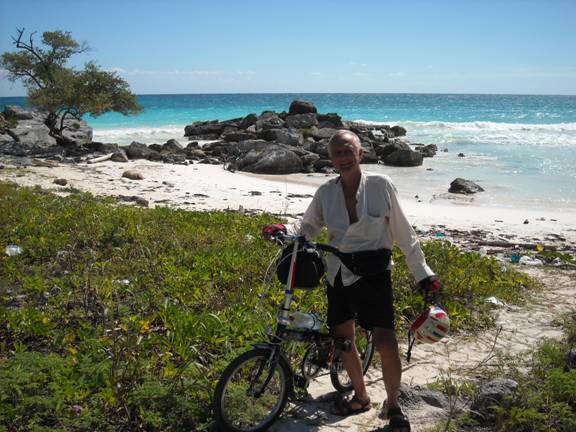
Caribbean waters of Riviera Maya south of the Tulum temple ruins.
Excerpt from the book; FINAL REPORT AND THE MAYA by Michel D. Coe, page 206.
“Yucatán was the greatest producer of salt in Mesoamerica. The beds extended along the coast from Campeche, along the lagoons on the north side of the peninsula, and over to Isla Mujeres on the east.
The great majority of goods traveled by sea since the roads were but poor trails and cargos heavy. The kind of commerce was cornered by the Chontal Maya, or Putun, such good seafarers that Thompson called them “the Phoenicians of Middle America.” Their route skirted the coast from the Aztec port of trade in Campeche, Xicallanco, around the peninsula and down to Nito near Lake Izabal, where their great canoes put into exchange goods with the island Maya…
It was this trade that linked Mexico and the Maya, for they had much to exchange- especially cacao and feathers of tropical birds for copper tools and ornaments- and it was probably the smooth business operators conducted by the Chontal that spared the Maya from the Aztec onslaught that had overwhelmed less cooperative peoples in Mesoamerica.”
   Tulum remained an active trading port when the Maya of northern Yucatán’s classic period collapsed due to an unprecedented two-hundred fifty year drought that commenced in the year 800 AD.
   The Chontal Maya continued their sea-going trade transporting salt from northern Yucatán to the still active Mayan centers of Lamanai, Tikal and Calakmul in the dense canopy jungle far to the south. They also carried on sea-going trade to as far away as Veracruz, Cuba, Florida and Central America.
Tulum offered a port of refuge on the Caribbean coast behind the second longest coral reef in the world. Entry to the protection behind that coral reef was ingeniously provided by a range marker that when lined up made a safe passage through the narrow break in the reef possible. The most astonishing thing of all was that these Maya even made their range marker useable by night by placing a fire behind a window that lined up perfectly with the safe passage through the break in the reef.
    This area was well developed with infrastructure that included a straight paved sacbe road to the Mayan temple town of Cobá and a straight manmade navigable canal nearly ten kilometers long to the temple town of Muyil which lies some twenty kilometers south of Tulum. The canal is fully functional to this day.
     In 1975 the Territory of Quintana Roo became a state, but was seldom visited, had nearly no paved roads and tourism was unheard of outside of the newly created resort town of Cancún. Besides being undeveloped it was a smugglers paradise for clandestine merchandise that strangely found its way into Mexico by night. 
    One boast of Tulum today is that they still do not have a jail.
    Though the Riviera Maya has been discovered now by world travelers there are still some extremely affordable options for visiting Tulum. 


   For less that $10.00 USD or $120.00 pesos a day, the Hostel Lobo Inn Tulum gives bed and breakfast with so much free stuff thrown in it seems impossible to believe. Free internet, TV, air conditioning, drinking water, open kitchen, security lockers, free bicycle use, swimming pool and an unbeatable location; Located across from the Tulum Ruins entrance and an ADO scheduled bus stop with quiet paved bike paths and trails along the Caribbean coast and into downtown shopping.    Camping and motor scooter rentals are also available.

Jane at Hostel Lobo Inn Tulum where bikers and back packers gather.

The patio and pool area where coconuts and travelers hang out.

   Here I am with the happy, helpful and friendly management team of Hostel Lobo who make Caribbean vacations affordable and fun. Julio center and Manual on right are setting the standard for inexpensive tropical vacations…perhaps the best deal in all of Mexico.
Hostel Lobo Inn Tulum

Carretera Federal Chetumal-Cancún
bedbikeandbreakfastulum@hotmail.com
Tel. 984-8712190 or cel. 984-1067933

   The best deal on a studio apartment available on a weekly and monthly basis in downtown Tulum is at Bin Wayak Apartments where amazingly everything works and all is maintained in pristine condition. New, modern studio apartments have kitchenettes and wireless internet included. Convenient shopping is a short walk away in a quiet and pleasant neighborhood.
Bin Wayak

Calle Jupiter between Sol y Murcurio streets next to the Lavanderia Burbujas
Centro Zona Maya, Tulum, Q. Roo tel. 984 7459966
www.binwayak.com

Fresh Caribbean air and quiet tranquility plus a super location for shopping, dining and the ADO bus terminal are an easy walk away.

Bicycle friendly with easy access to the beaches, shopping and a variety of interesting dining spots that have a laid-back Caribbean flavor featuring fresh sea food are reachable on quiet back streets and paved bike paths

Owner, developer and hospitality chief of Bin Wayak studio apartments, Tirso Monxón Ambrossi makes a wonderful place even better with his perpetually jovial disposition that invites your return.


You will not need air-conditioning here with huge screened opening windows that let in the trade-wind tropical fresh air.

Convenient bicycle parking and tranquil patios where year-round temperatures hover in a salubrious comfortable range that allows the warm trade-winds to make life easy and un-rushed are sure to beckon your return to Tulum.

Today transport and commerce connects the Riviera Maya and Tulum to the rest of the world by paved highway but the pristine Caribbean waters and fresh trade-wind breezes remain.
More Tulum information, visit our website: www.bicycleyucatan.com/tulum

 
www.mapatulum.net


©2010 John M. Grimsrud

Tuesday, November 2, 2010

FALL STORM AT THE SUPERIOR, WISCONSIN INLET November, 1968


FALL STORM AT THE SUPERIOR, WISCONSIN INLET November, 1968

The Superior, Wisconsin/Minnesota Point inlet and lighthouse pictured in calm weather;
Note; the following short story goes with this photo because of its geographical location.
It is a common occurrence to have at least one very violent storm in this season on Lake Superior but this one was exceptional.

Jane and I along with my father, who was living with us at the time, drove out late this Sunday afternoon onto a narrow finger of land known as Wisconsin Point.
We went to see just what the raging lake would be like whipped into a frenzy by almost one-hundred mile per hour winds.
While we parked our car the wind sent shudders of blasting sand mixed with icy pelting spray that coupled to make a deafening roar.
The sight was beyond our belief while we watched the sixty foot tall lighthouse tower on the east jetty completely buried in crashing seas.
There were four people trapped inside the lighthouse structure and several days would pass before they could leave their imprisonment.
The approach to that lighthouse had been constructed of huge boulders the size of small houses and those mammoth waves crashing into and over them actually scattered the rocks about like so many pebbles on the beach.
If this sounds bad you will not believe the sickening horror we felt as the next chain of events unfolded.
There we saw out on the lake and headed into port was an eight-hundred foot great lakes iron ore freighter with the full brunt of that savage storm sweeping it along on a path of no return. As large and as powerful as this ship was it was no match for the killer storm.
With the wind on their stern it would be utterly impossible for the crew to turn their ship into the wind and their fate was sealed. They had no other choice but to run the inlet.
What we witnessed next made our hearts nearly stop. We held our breaths and watched a super huge wave break under the stern lifting this mighty ship and sending it into a broach position which then turned it beam to the sea.
The power and force unleashed here took all control out of the hands of the crew. Their fate rested with Mother Nature while the ship washed out of control sideways.
In the blink of an eye it was over. The massive vessel had gone surfing sideways through the outer and inner jetties and then into the safety of the harbor.
For those aboard that got to stair the Grim Reaper squarely in the eye that blink of the eye must have felt like an eternity.
After witnessing this assume event Jane and I still went on and ventured out there onto Lake Superior to confront the mighty Gitchi Gami big sea waters. 
In 1972 Jane and I set sail away from Superior, Wisconsin aboard our home designed and built 46 foot sailing vessel Dursmirg. We crossed the Great Lakes, Erie Barge Canal and Hudson River to New York where we turned south to begin many years of ambitious adventures
We have written and published the four volume story of that escapade entitled, Travels of Dursmirg.


Monday, October 25, 2010

MÉRIDA'S MAGNETISM

MÉRIDA’S MAGNETISM
When you ask foreigners who now live in Mérida what attracted them to Mérida and why they stayed, you will get a wide range of answers. They fell in love with the colonial city, they had always dreamed of living in a foreign land, they felt safe, the people are friendly and make you feel welcome, and the winters are warm.

You might meet someone who says moving to Mérida was the biggest mistake they ever made; they hate everything, the heat, the bugs, the people, the food. When you hear this, remember that there are people who can be miserable anywhere. As the sign said on the entrance to the Magic Theater in Hermann Hesse’s novel Steppenwolf, “Not for everybody.”

Living in Mérida, Yucatán, is a good decision for many people. The U.S. embassy in Mexico City estimates that there are more than 600,000 Americans living in Mexico. An estimated 300,000 Canadians live in Mexico, at least part-time. Mérida has expats from all around the world.
Listen to the voices of foreigners who came to Mérida, and they will tell you why they stayed.

Connie Burk says:
“After six years of living in Belize in a remote, rainforest setting, my husband, Jerry, and I were ready for a change. After living near and working with quite poor Maya villagers, and always being perceived by them as being very rich, we were looking for a situation where we could "blend in" with a vibrant middle class in Mexico. We already knew and loved Mérida from many years of traveling, and we thought we'd try a taste of city life. The colonial architecture, especially with its tall walls enclosing the gardens, was especially enticing for me because I tend to deal with hot weather by removing most of my clothing at home! Now, we're in the middle of the city, but our garden is very private. We're very happy here.”

Debbie Moore says:
“I came to Mérida by accident. On a prospective buying trip to Majahual, I happened to meet Mitch Keenen and asked him where he lived. His answer: Mérida. Mérida? Back then Mérida was a place no one had even heard about. I was already committed to life on the Mayan Riviera. My curiosity aroused I started checking the real estate sites for Mérida.
Once I saw those broken down colonials I was hooked. After 3 years of looking at and dreaming about Mérida, I finally made the trip. I bought my house in 3 days.
What I love about Mérida is that Mérida is like kissing a toad and finding a prince.
Like most first time visitors to Mérida, my first impression was of a city in general decay. However, the more time you spend here the more wonderful “layers” you discover and the less old paint you see.
Yes, the wonderful old colonials are often in ruins but the amazing transformations that people create are wondrous. Every home is completely different, unique, and creative. It is always a treat to visit one no matter how modest. Even the non colonial homes of Mérida are interesting.
The city offers everything you could want from culture to shopping to excellent medical service. After living in Playa del Carmen for 3 years, Mérida is more like living in the US as far as amenities go.
Mérida offers a true Yucateco experience to anyone seeking it. From exploring the ruins to participating in the holidays and festivals, a person can totally immerse themselves in this rich and colorful culture.
We also have a large, varied, and interesting expat community. There are a number of charitable groups and some “fun” organizations too. Life here is never lacking for social interaction if that is what you like.
However, after a number of years here, the thing that still amazes me most are the people.
The Yucatecos are, for the most part, a quiet and gentle people; therefore the city exudes a quiet energy, a sense of tranquility and well being that is lacking in most places today. Life here is so CALM and PEACEFUL and JOYFUL, unlike life in the rest of North America these days.
Every day I sit in my garden here in Mérida, hear the church bells, and count my blessings.
I ask myself “How did I pull this off?”
Coming to Mérida is one of the best things I have ever done in my lif

Tom Kuhn says:
“Why? We had traveled for a couple of decades within the borders of many Latin American countries. Most of our travels were taking place in México as it was a comfortable fit for us. A friend that lives in Mérida invited us to visit. We found Mérida to be a wonderful city, culturally diverse, very friendly people, minimum crime, and superb medical care in all fields. Mérida is close to the Gulf and the Caribbean and that makes it simple to get our ocean fix when we need/want one. In addition it has an international airport which makes traveling very easy.”

Mary Anne and Allan Dunlop say:
"We were initially looking for a warm and easily accessible destination to escape Canadian winters. From the many options we finally chose Mérida for its culture and its people. Do not come here if you want to simply export your own culture to a warmer climate. Come here to find a rich history and incredibly diverse people - French architecture, Spanish colonial influences, the amazing Mayan ruins and people. The hospitals are excellent (doctors still do house calls) and it is safe to walk any street at night. Restaurants range from Ritzy to modest (you must try the cocinas economicas) and entertainment from the Symphony to dancing in the street. We love it here."

©2010 John M. Grimsrud
 

Monday, October 18, 2010

In Search of the "Old Country"


Written by John M. (Bing) Grimsrud
                                                                     
In many ways, it seems like a very long time ago and in many ways, it was.
I still have an indelible mental image of Grandpa Christ, “C.C.” Grimsrud, leaning back in his big gray stuffed easy chair after dinner with a far-off look in his eyes as he spoke of the “Old Country”.
The “Old Country”?
My young interest was perked and my curiosity was stirred as my mind searched for answers.
Where was this “Old Country”?
What was this “Old Country”?
Who lived in this “Old Country”?
Though the questions went unanswered, they remained alive and my curiosity haunted my dreams throughout my life.
By and by Grandpa passed away but that seed of curiosity he planted continued to live on in my mind until one day when I was a middle-aged person I just had to find out about the “Old Country”.
How ironic it all is now looking back over those years. As I write these words, I realize that I am now at the age of 70, older than Grandpa Christ was when he perked my curiosity back in the early 1940s with his talk about the “Old Country”.
My first trip to the “Old Country” happened back in 1983. I had the time and money so all I lacked were the contacts.
A second cousin of mine named Dee Braverman had contacted me in her search for Grimsrud family information while researching the family tree. I was surprised how very little I actually knew about the family history. However, in corresponding with Dee, she put me in contact with the Grimsruds in the “Old Country”.
Next I sent off a letter to Kari Hoven, who I had met when she visited in America and spent one year in 1948 with Grimsrud relatives in the Superior, Wisconsin area.
Kari turned out to be the very best person to correspond with because of her incredible aptitude to recall names, people, places and dates, plus she has an incredibly exuberant enthusiasm. (I was amazed at the family resemblance that Kari had to my father…they could have been twins.)
It turned out that Kari remembered me, my parents and every detail of her visit to America, (the “New Country”), in vivid details. She still had a photo of my little brother and me from her 1948 visit.
My wife Jane and I spent six weeks in Norway in 1983 and got to hear countless stories told by my relatives who Kari made sure we had the opportunity to meet. We were with different group’s morning, noon and night, every day and the quantity of coffee and open-faced Norwegian sandwiches we consumed was unfathomable. We took notes, kept a logbook and took photos of nearly everyone we met and their homes.
The ocean and the distance that separated the “Old Country” and the New Country in those days after Grandpa Christ left were more than enormous. Consider this, I was the very first of all of my grandfather’s direct descendants to make a trip back to the “Old Country”. Grandpa Christ left in 1896 and it wasn’t until 1983 that I set foot upon the rock bound coast of Norway, the “Old Country”.

This photo was taken seven years before Henry Ford produced his first automobile in 1903. It was a transitionary time between horse and the industrial age of steam power.
The above photo was taken in 1896 in Superior, Wisconsin, at a studio on Conner’s Point then known as West Superior. Left is Christ “C.C.” Grimsrud b.1879, my grandfather.  Next is Louis the (adopted stepson of Martin Grimsrud b.1862) and Hans Grimsrud b.1877 and the older brother of C.C. Grimsrud. Christ, Hans and Martin were all brothers born in Norway who immigrated to America before 1895.

The era was referred to as “the golden age of bicycles”. My grandfather Christ, on the left, had a Victor bicycle, the first with pneumatic tires that were glued onto lightweight wooden rims. Hundreds of firms were competing in this intense market of high demand where the typical bicycle was selling for $100.00.
The bicycle in the center is equipped with a carbide lamp, the same type used by miners.
Inspirations and motivations that drove my Norwegian ancestors to take that leap into the strange new world leaving behind family, friends, home and inheritance were many and individual.
In the history of humankind this immigration was an unprecedented phenomena and nothing quite like it had ever happened before. Previously the human condition was a victim of their geography. But now the option of escape flung open a new door of opportunity.  
Dazzling stories of limitless fertile lands across the sea in far off America, free for the taking, lit up the imaginations of the young Scandinavians who had never even remotely dared to dream such a dream before. Their Viking spirit had come alive.
These were the first days of the industrial revolution when the might of steam power opened new horizons and lifted the burden from men’s shoulders and sped them across oceans and continents. The world would never be the same again.
The American frontier of those years was anything but a utopian environment. A violent civil war exploded in 1861 and the next year the American government offered every immigrant 160 acres of surveyed land while the native Indians were massacring the new settlers in Minnesota and the Dakota Territory. These were not good times for America and in 1879, the year my grandfather was born in Norway, a great economic depression struck America.
As an added incentive to immigrate, Sweden began in 1860 to enact policies toward Norway restricting their sovereignty that caused enough political strife to ultimately dissolve their union and in 1905 Norway was declared an independent kingdom.  
In spite of the many horrible hardships these new immigrants would face in their new country, they kept coming in larger and larger numbers year after year. At the same time the Dakota Territory embarked on a land boom that would last from 1879 until 1920. The convergence of these extraordinary circumstances captivated an entire generation caught in the crosshairs of time.
Here I can speak for my family because they were part of this monumental and irreversible happening that sent a nation’s eager and daring young people to a far off land saying a permanent goodbye to family, friends and home.  
The stories were many and the reasons for leaving were underscored with powerful motivating forces that in the end would result in a torrent of immigration that would ultimately find more Norwegians in Minnesota than in Norway.
Some of the stories ended in brilliant successes built on hard work and determination others fizzled away on bad land farms but the good stories and the bad all held fascinating human interest of a time in human history like none other and my family was a part of it all.
Here is an observation and quote from George Grimsrud of Janesville, Wisconsin. “Norwegians are tough, they live a long time, and there isn't much land [in Norway].”
In addition to the fact that there isn’t much land in Norway that is productive enough to support a family, the reality is that in a family of thirteen children like my grandfather’s, only one would inherit the farm. The rest would have to do the best they were able and the incentive to depart became a very powerful and motivating force.
Martin Grimsrud, born December 2, 1862 on the Grimsrud farm at Skoger, Norway, was the second child and first son of thirteen so he was, according to the custom of the time, the one to inherit the farm.
We can only guess now what inspired and drove Martin to leave the certainty and security of his home to make a totally new beginning in a strange and far off land that held out only one promise, and that was opportunity. Well, he wasn’t the only one to leave but he gave up more than most. Martin was driven beyond the distant horizon by the spark of his Viking ancestry.
To those that picked up the challenge and executed their dreams their fate was all but sealed. Like leaping from a tall building, at the moment it might have seemed like the right thing to do but once air-borne, no matter how strong the pangs of remorse might have been, the outcome was hopelessly irreversible.  
So it would be with these Viking spirited immigrants chasing their dreams across the oceans to America’s wild and unsettled frontiers.
Martin was not the first Grimsrud of our family to immigrate to America.  An uncle of Martin, Anders Grimsrud, born in 1839 and the fourth child of Peder Christophersen (Grimsrud) and his mother Anne Beathe Andersdatter Skot of Dalen immigrated to America in 1869 along with his wife Karen Antonette Christonsdatter Grytebakke.
Evidently Anders had a powerful influence on his nephew Martin who then came to Atwater, Minnesota, in America and then became established and went on to assist many of his 12 brothers and sisters to immigrate to America. Martin first settled in Minnesota in Dane County and next in Pope County. He later moved on to Superior, Wisconsin where he married Randi Hoff.

 Above, the first grocery store in Superior, Wisconsin, located on Conner’s Point and built by Martin Grimsrud, my grandfather’s oldest brother. The store was featured on page 29 in the publication Eye of the Northwest by Frank A. Flower, printed in 1889.  
My grandfather, Christ C.C. Grimsrud the tenth child of those thirteen, owes his opportunities in America to his older brother Martin who not only helped him to immigrate but taught him the meat market business and even helped him to go into his own private business.
Martin Grimsrud was one of the success stories. He had a dynamic life, was a successful businessman, became active in the local government and had a good family.

©2010 John M. Grimsrud


To read more about the golden age of bicycles, I recommend The Lost Cyclist by David V. Herlihy.